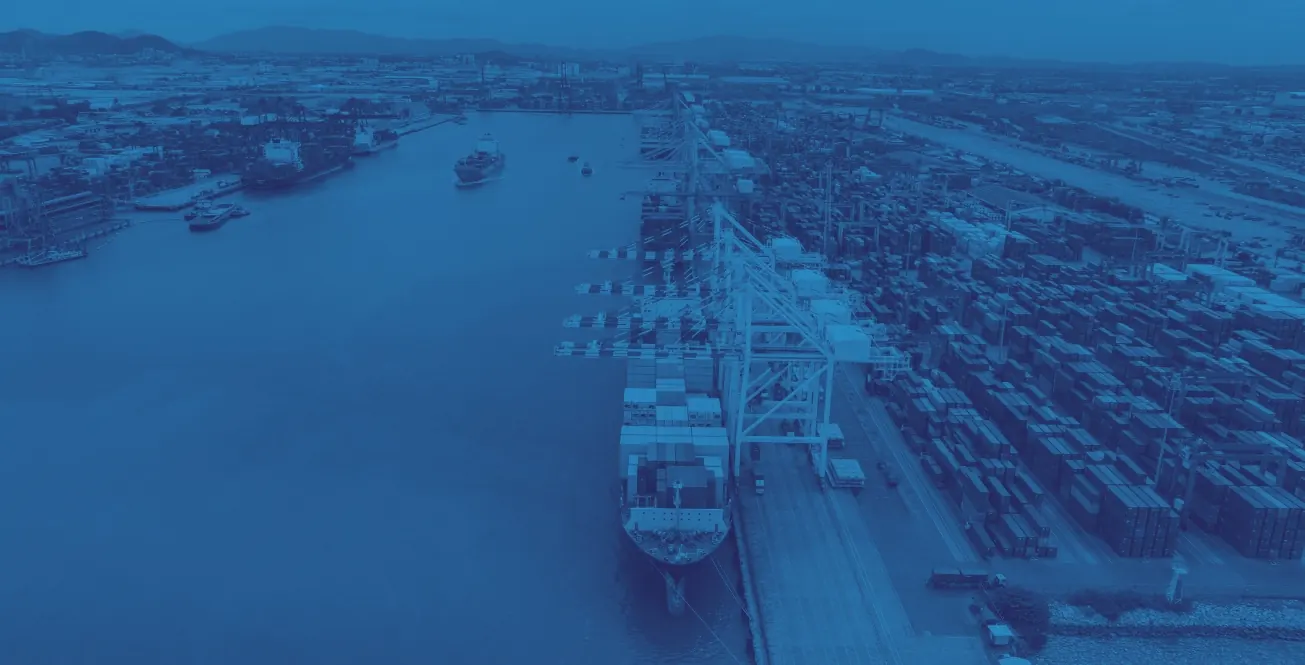

A concession is not measured by what gets signed, but by what happens at the quay ten or twenty years later. Above all, a good contract is an incentive system.
The contract as an incentive system
A port concession is often presented as a legal instrument. But for those who design it, what matters is something else: it is an economic mechanism that determines who invests, who bears each risk, how invested capital is recovered and what users receive in return—a topic that may seem secondary but is crucial to the development of the business.
When the document is well designed, the interests of the state, the concessionaire and port users point in the same direction. When it is poorly designed, each party optimises its own interests: the concessionaire maximises returns with the least investment possible, the state seeks the highest concession fee, and users pay the difference in delays and logistics costs, harming the wider economy served by the port.
The fundamental question is not “which clauses should be included?” but “what behaviour will this contract reward over the next thirty years?”
What the state should require
The most common mistake is to demand too much of what is easy to measure and too little of what truly matters. A high concession fee or an investment commitment tied to a rigid schedule is easy to verify, but does not guarantee an efficient port.
A state that awards concessions thoughtfully tends to focus its requirements on four areas:
Purposeful investment. Not just how much is invested, but in what and when. Investment obligations work better when triggered by actual demand and occupancy conditions than by fixed dates set before the market and its fluctuations are known.
Operational performance. Productivity per berth, vessel waiting times, cargo dwell time and truck turnaround at the gate. A few well-defined, auditable indicators. As with cargo handling and operations, timely access to data helps build a better understanding of the environment and supports sound, rapid decisions.
Open access and neutrality. The terminal should serve all users under transparent conditions, without creating dominant positions that ultimately make the supply chain more expensive.
An orderly handback. At the end of the term, the asset should return to the state in good condition, with the information, systems and processes needed for a transition without disruption. The port must continue operating after the contract ends, whether a new company takes over the concession or the state manages a temporary, orderly transition to the new concessionaire.
There is also something the state should avoid: intervening in day-to-day management. The contract defines what must be achieved; the concessionaire decides how. A state that dictates how also assumes responsibility for the results.
Which risks the private party should bear—and which it should not
The principle is simple but difficult to apply: each risk should be borne by the party best able to manage it.
The concessionaire is better placed to manage operational risk (productivity, costs, maintenance, technology and commercial activity). It is also better placed to manage construction risk when it controls design and delivery. It is reasonable for it to bear some demand risk, since it knows the market and can influence it.
By contrast, there are risks the private party cannot control. Transferring them in full only results in a higher risk premium in the bid: regulatory changes, delays in permits or dredging handled by the state, public decisions about road and rail access, or force majeure events.
Transferring all risk to the private party may look like a good negotiation. In practice, it tends to produce more expensive, less competitive bids or projects that are renegotiated within a few years. A balanced allocation is not a concession to the investor; it is a condition for the project to be financeable and sustainable.
Linking tariffs to service levels
This is where the contract becomes operational. A tariff unrelated to the service provided misaligns incentives: the concessionaire collects the same amount whether it performs well or poorly.
There are three complementary ways to link them:
A maximum tariff reviewed against performance. The tariff cap remains in place when agreed service levels are met, and is adjusted (downward or with a smaller increase) when there are sustained failures.
Incentives for exceeding standards. Bonuses or tariff flexibility when the terminal outperforms its commitments, so operational improvements also bring economic benefits.
User compensation. Transparent mechanisms when service failures are attributable to the terminal, so the cost of inefficiency does not always fall on those left waiting.
For this to work, indicators must meet three conditions: they must be measurable using verifiable information, reasonably within the concessionaire’s control, and few in number. A contract with forty indicators cannot be effectively monitored; one with five or six can.
Calibration also matters. Standards that are too lax change nothing; those that are too demanding create constant disputes. They are best set using benchmarks from comparable terminals and an improvement path that recognises the learning curve.
Contracts built to last thirty years
No forecast of demand, technology or regulation holds for three decades. That is why, alongside risk allocation and incentives, a robust contract needs mechanisms for adaptation.
This means providing from the outset for periodic reviews, thresholds that trigger new investment, criteria for rebalancing the economic equation when underlying conditions change, and monitoring governance with clear responsibilities, shared information and rules for resolving disagreements.
Renegotiation is not a contract failure. Renegotiation without rules—improvised and under pressure—is. Good design turns adaptation into a predictable process rather than a conflict.
The contract worth designing
A successful concession is not one that maximises the concession fee or minimises the state’s risk. It is one that enables the concessionaire to earn more when the port performs better, allows the state to safeguard the public interest without managing operations, and gives users a predictable, competitive service. The public interest is vital: port services are essential to a country’s economic and logistics systems. Losing sight of this objective puts the entire productive system at risk.
In other words, the goal is not to write a longer contract, but to design one that makes it unnecessary to debate every decision.
A port is not concessioned simply to comply with a contract. It is concessioned so that the contract helps it operate better.