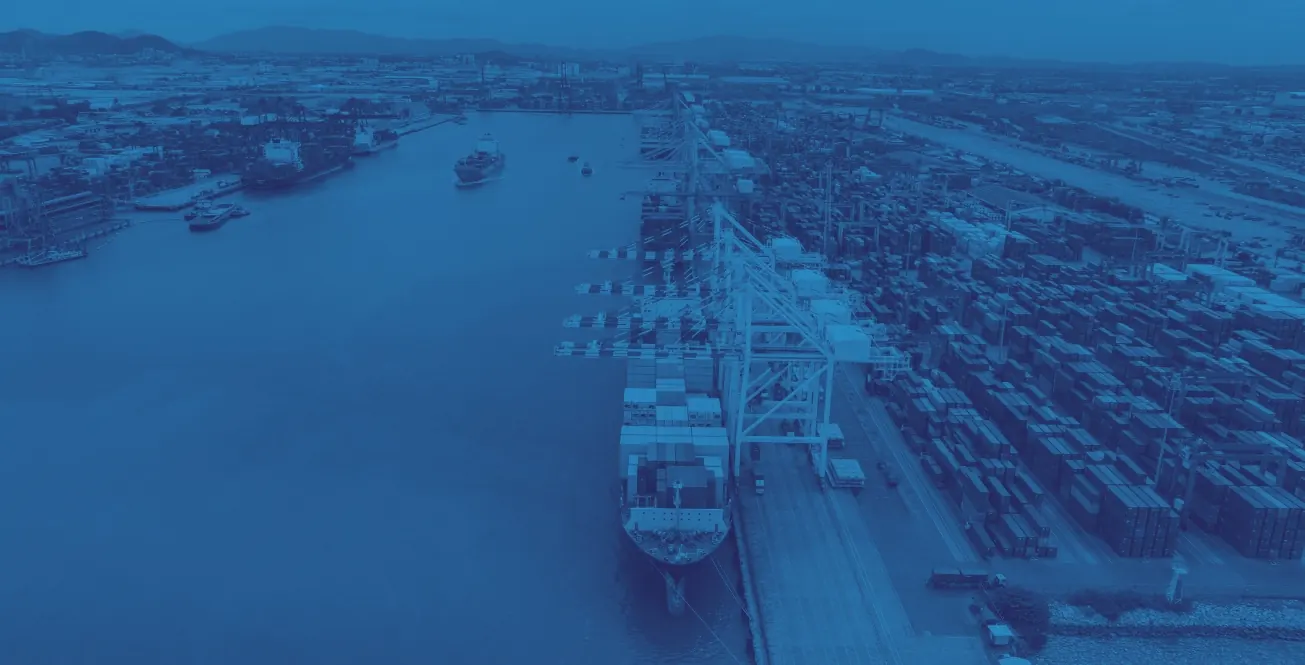

A port master plan should not be a bet on the future. It should be a decision system that supports action today, preserves options and waits for signals before committing further investment.
Scenarios instead of bets
Ports make decisions that can shape operations for decades, yet they do so while markets, cargo flows, trade routes, technologies, logistics costs and environmental requirements keep changing. A single cargo forecast should therefore not become the centre of a master plan.
The real challenge is not guessing how much traffic a port will handle in 2045. It is building a framework that supports sound decisions when real market conditions begin to show which scenario is taking shape.
A resilient master plan needs different scenarios: growth, stagnation, changes in cargo composition and transformations in logistics chains. Each scenario should become practical questions about necessary infrastructure, strategic land, phased investments and decisions that should wait for evidence.
Working with scenarios does not mean postponing investment. It means sequencing it: first, investments that protect connectivity, safety, resilience and operating capacity; then, expansions linked to demand that is actually materialising.
From document to decision system
Many master plans become reference documents rather than management tools. The difference lies in triggers. Instead of stating that a new berth must be built in a certain year, the plan can define the conditions that activate the decision: utilisation, sustained demand growth, waiting times, capacity constraints or changes in cargo composition.
Indicators do not need to be numerous. They need to support decisions. Berth utilisation, waiting times, cargo dwell time, yard availability, access reliability and market evolution can become practical signals for revising an assumption or activating an investment.
Reviewing the plan without starting over
Uncertainty does not mean that a master plan must change constantly. It means that a monitoring structure must compare the original assumptions with what is actually happening. That requires indicators, responsibilities, review frequency and criteria for changing the investment portfolio.
The long-term vision should remain stable in access, strategic land, navigation conditions, expansion areas and climate adaptation. More reversible decisions should retain room to change in sequence, scale or technology.
A good master plan does not eliminate uncertainty. It incorporates it into the decision-making process.
The port boundary often lies outside the port
An efficient berth cannot indefinitely compensate for a congested road connection, an incomplete rail link or an urban interface that creates conflict. A port is a node within a logistics network, not isolated infrastructure.
A port master plan should therefore involve municipalities, road authorities, rail operators, customs, terminals, carriers and logistics developers. Where the port has no direct decision-making power, it needs coordination capacity.
Planning then moves beyond the port perimeter and considers the logistics system the port belongs to.
From vision to an executable portfolio
A master plan creates real value when it becomes an executable project portfolio. Each initiative should have a clear purpose, an owner, identified dependencies, estimated costs, potential funding sources and a condition that justifies starting it.
A master plan should not be a bet on what the port will look like twenty years from now. It should be a system for deciding what to do today, what to preserve for tomorrow and which signals to wait for before committing further investment.
The future of trade is not under the port’s control. But being prepared to respond when that future becomes visible is its responsibility.