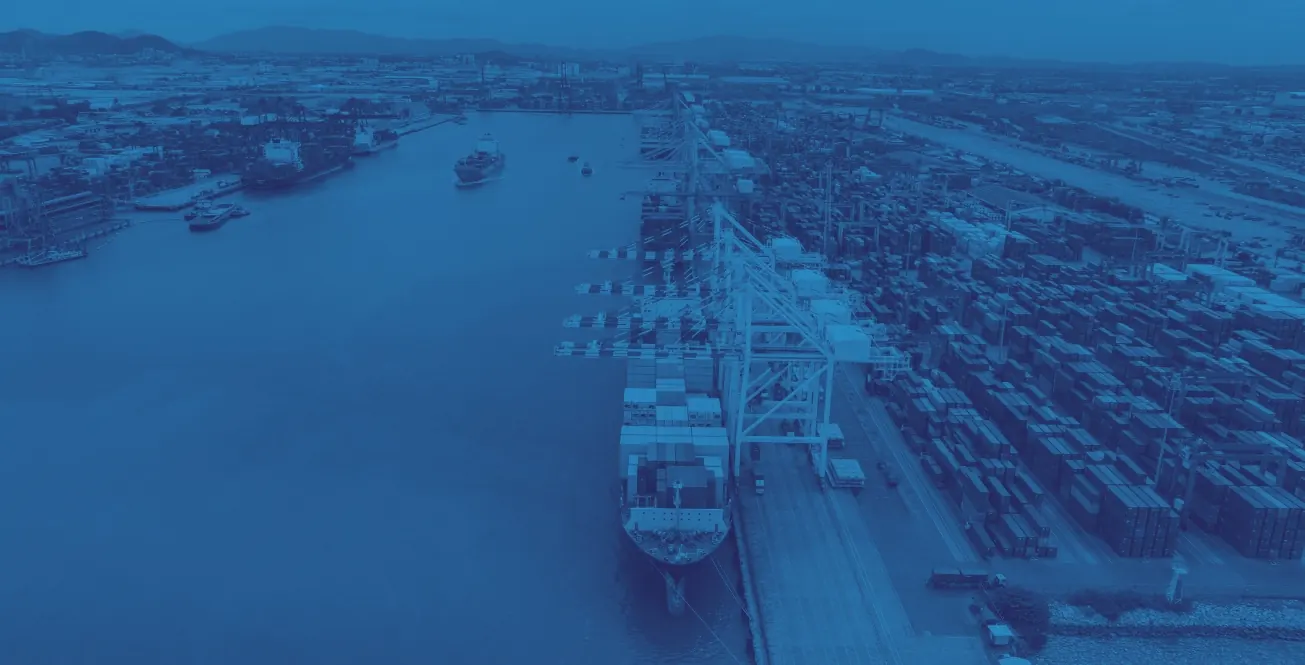

Port competitiveness depends not only on how much a port can grow, but on how the system connecting it to its users, its region and logistics chains performs.
Competitiveness is a system-wide challenge
Discussions about port competitiveness often begin with infrastructure: new berths, greater depth, more modern cranes or terminal expansions. These are important capabilities. But on their own, they do not guarantee a more competitive port.
A port may have suitable facilities and still face delays, high costs, inefficient land connections, unclear rules or difficulty coordinating the parties involved in operations. Competitiveness is shaped by how all these elements interact. Above all, it is a system-wide challenge.
Infrastructure is a prerequisite, not the outcome
Infrastructure makes it possible to operate, receive vessels and move cargo. The strategic question is whether that capacity translates into a reliable, efficient and valuable service for port users.
Answering that requires looking beyond physical assets. How productive are operations? How long does cargo stay in port? What costs do users face? How well do terminals, authorities, carriers and public agencies coordinate? How predictable are the rules, tariffs and timelines?
The answer is rarely found in a single project or isolated indicator. It emerges by examining the connections — and bottlenecks — between parts of the system.
Productivity and costs: day-to-day performance
Port productivity depends on how processes are organised, equipment is used and operations are coordinated. Added capacity can have less impact if access delays, underused resources or procedures that create waiting times persist.
These frictions affect costs and the user experience. So before concluding that more infrastructure is needed, it is worth understanding how existing capacity is used, where time is lost and which operational changes could improve performance.
This does not mean investment is unnecessary. It means investment should respond to a diagnosis: which constraint it addresses, what benefits are expected and how it fits with the port’s other capabilities.
Connectivity and hinterland: the port does not end at the quay
Port competitiveness is also built inland. Connections to production and consumption centres, transport availability, access coordination and the smooth flow of exchanges determine how well a port fits into logistics chains.
An efficient quay can lose its advantage if cargo faces delays or extra costs on the way in or out. Port planning must also account for the hinterland and how it evolves: productive activities, cargo flows and connection options that shape present and future demand.
Governance and tariffs: rules also shape competitiveness
How decisions are made has a direct impact on performance. Clear governance helps coordinate responsibilities, set priorities and make investment and operations more predictable. When roles overlap or decisions are not aligned, coordination costs can spread throughout the system.
Tariffs and regulatory frameworks are also part of the equation. They should be understandable, consistent with the services provided and compatible with efficiency and development goals. Their design needs to account for the incentives they create for operators and users, as well as their effects on the port’s financial sustainability.
Reliability turns capacity into value
For logistics chains, it is not enough for a port to be able to operate: it must do so predictably. Reliability is reflected in stable timelines, service continuity, transparent information and the ability to respond to change or disruption.
That confidence does not come from a single measure. It results from well-designed processes, institutional coordination, useful information and decisions sustained over time.
Understand the system to make change happen
Improving competitiveness means connecting diagnosis with execution. First, understand how the port works in its context: its operations, costs, connections, rules and priorities. Then identify the highest-impact opportunities, organise decisions and define a roadmap with stages, owners, investments and risks.
This approach makes it easier to compare options: improve processes, adjust coordination mechanisms, review tariff frameworks, strengthen connections or develop new infrastructure. Each port needs responses suited to its institutional and operational reality; no single solution can be transferred without adaptation.
At DOMINUS, we approach port development from this integrated perspective. We support authorities and operators in turning analysis into actionable decisions, combining port expertise, local insight and a focus on implementation.
The question, then, is not only how much a port can grow. It is also how it can operate better, connect better and provide a more reliable service. That is where a port competitiveness strategy begins.
Learn more about how we work at DOMINUS.